


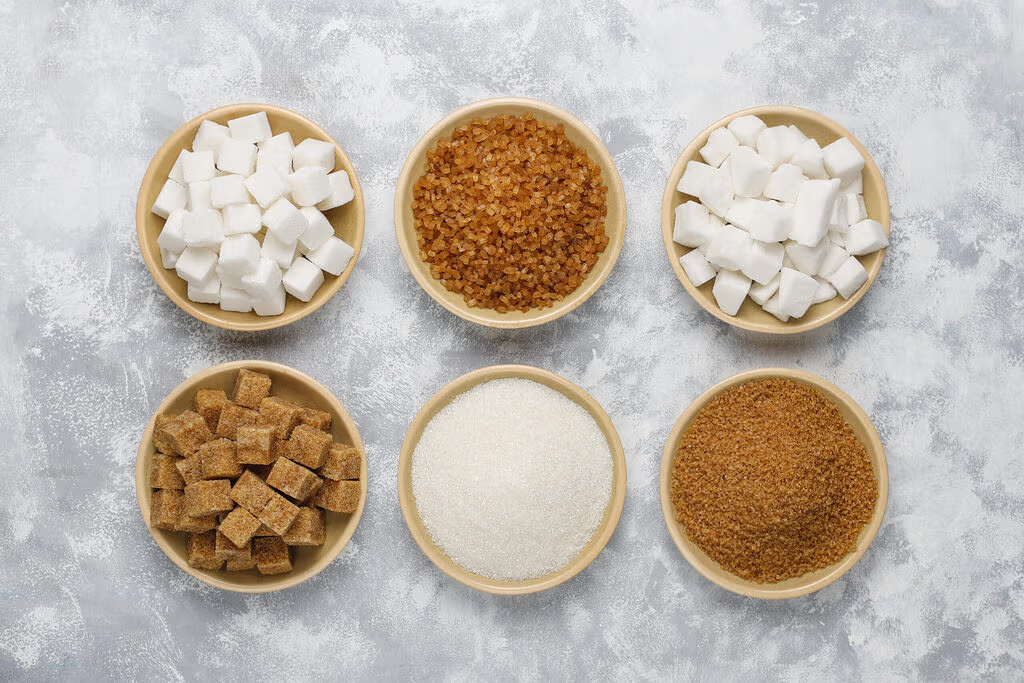
Cutting sugar in a recipe almost always means losing texture, structure and pleasure. The best pastry kitchens have found another way. Not a miracle sweetener swapped in at equal weight, but a real understanding of what sugar does, so you can rebuild indulgence without it.
- What sweeteners cannot replace, and why
- The 4 real functions of sugar in pastry: only one of them is sweetness
- The sensory levers that recreate indulgence with less sugar
- How to apply this to your own recipes, step by step
This is neuro-sensory pastry: using the way the brain actually perceives sweetness, not just swapping one ingredient for another. The idea is simple and grounded in science. The brain tastes before the mouth does.
In luxury hotels, fine-dining restaurants and urban coffee shops, demand for desserts that are less sweet but just as desirable keeps growing. A sweetener alone is not enough. The real answer lies in understanding sensory perception and reformulating recipes intelligently.
Sugar has four functions, and only one is “sweet”
Before reducing sugar in a recipe, you need to understand what it really does there. In professional pastry, sugar performs four distinct functions:
- Sweet taste: the most visible function, and technically the least important.
- Texture building: bulk, viscosity, crunch, structure.
- Water management: water activity (aw), softness, shelf-life stability.
- Aroma release: sugar binds and releases the volatile compounds that carry flavour.
Cutting sugar without a strategy is like removing a load-bearing column. The dessert collapses in texture, stability and taste, not because it lacks sweetness, but because all of its technical functions have been thrown off balance at the same time.
If you reduce sugar, you have to compensate for its functions (bulk, structure, water), not just its taste. Jordi Bordas, B.Concept
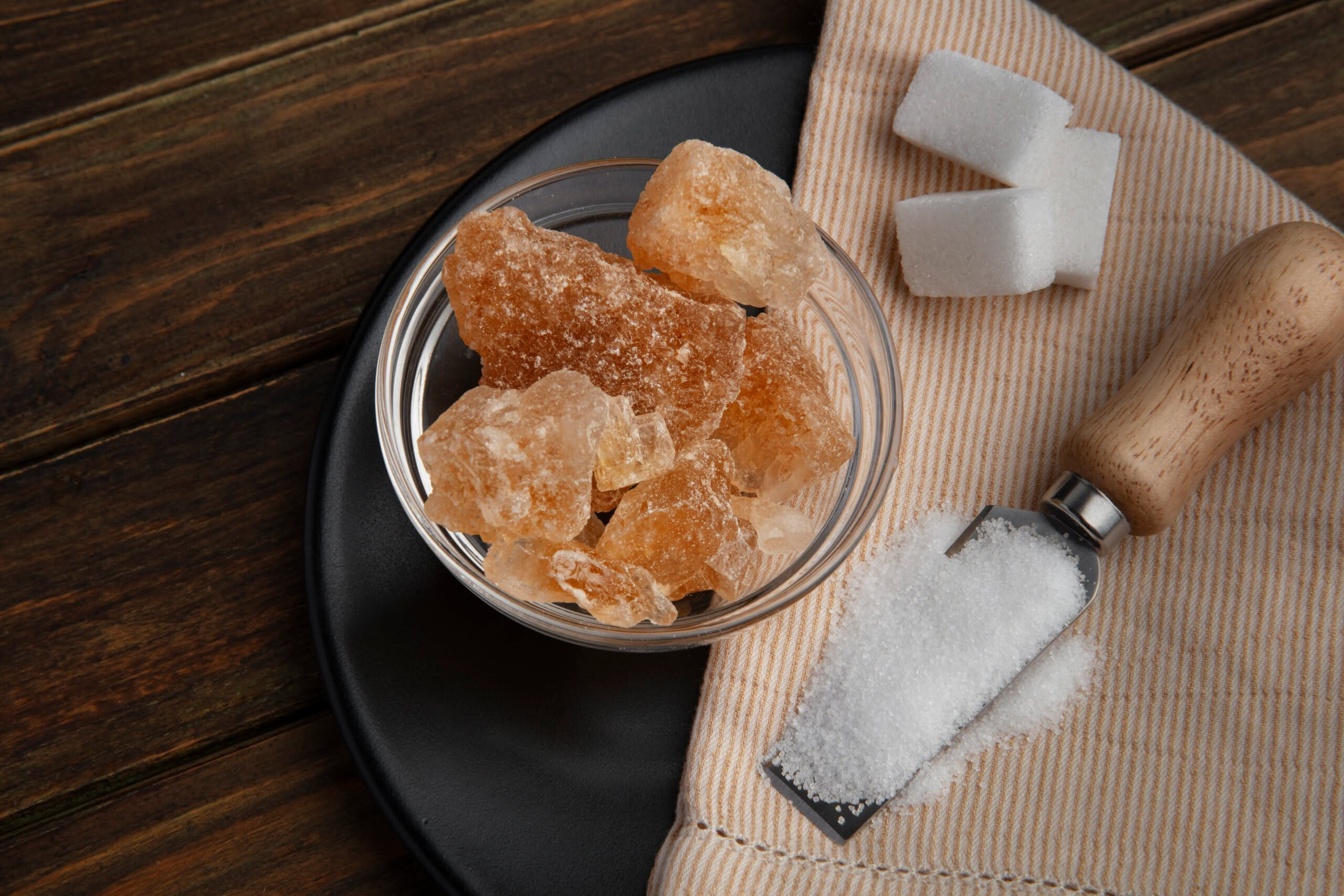
Why you can reduce sugar without frustrating guests
Perceived sweetness is not a single signal sent by the taste buds. It is a multisensory construction that the brain assembles from several channels at once:
- Retronasal smell: the aromas perceived in the mouth while eating
- Texture: viscosity, coating, length on the palate
- Temperature: cold lowers perceived sweetness, warmth amplifies it
- Contrasts: acidity, bitterness and salt add relief and make sweetness easier to read
- Sight and shape: the design of the dessert shapes expectations, and therefore perception
The most powerful lever is aroma. Certain so-called congruent aroma families (vanilla, caramel, ripe fruit, dairy notes) trigger a cognitive association with sweetness in the brain. The measurable result: a less sweet dessert with a stronger aroma profile in these registers is perceived as sweeter than a sweeter dessert with a neutral aroma profile.
The 5 neuro-sensory levers in professional pastry
Here is how to activate each lever without changing the identity of your products or overloading your mise en place.
Lever 1: Boost sweetness with aroma
The brain links certain aroma families to sweetness even before sugar is detected. In professional pastry, treating aroma as a structural ingredient, on a par with flour or butter, lets guests perceive more sweetness with less sucrose.
Grant Achatz (Alinea, Chicago) popularised the idea of delivering aroma at the key moment of tasting to amplify the experience. In boutique and hotel pastry, the same logic appears in aroma profiles strongly oriented towards vanilla, caramel or dairy notes, designed to carry the perception of sweetness without increasing the glycaemic load.
Lever 2: Extend the sensation on the palate
A rounder, longer texture increases satisfaction, even with less sugar. A more viscous matrix slows dilution by saliva and prolongs aroma release, which gives the brain more time to build the feeling of pleasure.
Whipped ganaches, aerated crémeux, coating textures built with structured fat systems, fibres and hydrocolloids: this is the path pastry chefs such as Frédéric Bau have explored under the banner of “mindful indulgence”. The key is balance, not blind additions.
Lever 3: Create smart contrasts
A one-note dessert quickly becomes tiring. A dessert designed as a sequence of sensations holds attention and increases overall satisfaction. The most effective contrasts for sugar reduction:
- Crunchy / melting: texture contrast sharpens attention and lengthens the tasting
- Cold / warm: plays on the thermal perception of sweetness
- Acidic / sweet: well-calibrated acidity (citrus, red berries, yoghurt) replaces part of the sugar load by adding relief and freshness
Lever 4: Design the sweet attack
The brain mainly remembers two moments in a tasting: the attack and the finish. The strategy is to concentrate a reduced but precise dose of sweetness on these two moments, rather than diluting it evenly throughout the whole preparation.
Practical tools: a thin glaze on the surface, a sweet powder or spray, a fast-release insert at the heart of the dessert. Less sugar overall, but a stronger perception at the right moment.
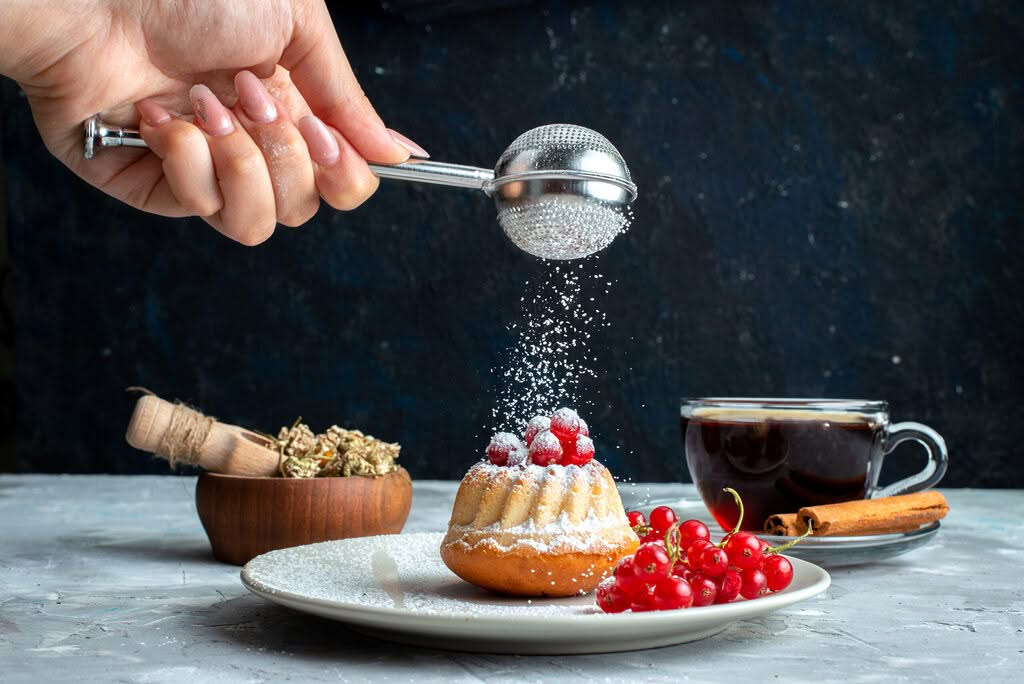
Lever 5: Use design as an ingredient
Shape, colour and presentation context influence taste perception. This is not anecdotal: scientific work on multisensory perception (Charles Spence, Gordon Shepherd’s Neurogastronomy) documents the measurable effect of visuals on perceived sweetness.
- Rounded shapes, cognitively associated with sweetness, unlike sharp angles
- Warm colours, gold, cream and caramel steer expectations towards sweetness before the first bite
- Storytelling and plating, a dessert that is “well told” on the menu or well presented on the plate is perceived as tastier
Heston Blumenthal illustrated this principle with his “Sound of the Sea” dish: the sound of waves played during the tasting objectively increased the perceived briny flavour of the dish. The environment is an ingredient.
What the best pastry chefs do
Jessica Préalpato (Desseralité) popularised the idea that sugar can become a seasoning: you look for the natural sweetness of the produce, the season, the ripeness. You no longer impose it, you reveal it.
Jordi Bordas (B.Concept) highlights a key point in formulation: if you reduce sugar, you have to compensate for its functions (bulk, structure, water), not just its taste. Sugar reduction without an overall reformulation is bound to fail.
- Reducing sugar without slipping into ultra-processed products
- Standing out with a distinctive sensory signature (texture + aroma + sequence)
- Telling a “better designed” story rather than a “less” story, which is far more compelling commercially
- Meeting the needs of an international clientele increasingly focused on nutritional quality, with no compromise on pleasure
Conclusion: tomorrow’s pastry will be better perceived
Tomorrow’s pastry will not be “less sweet”. It will be better perceived. Once you understand perception, you can reduce sugar without breaking indulgence, and even create desserts that are more modern, clearer and more desirable.
This approach puts R&D back at the centre. The goal is not to replace sugar. The goal is to redesign the entire taste experience.
In consulting missions for luxury hotels, culinary schools and food brands, T.A. Consulting supports the transformation of desserts: defining the sensory target, choosing ingredients and processes, trial plans and prototyping. Sugar reduction, plant-based, gluten-free, allergen-free and low-GI pastry: this is exactly our scope.
Frequently asked questions about neuro-sensory pastry
What is neuro-sensory pastry and who is it for?
Neuro-sensory pastry is a formulation approach that relies on the brain’s perception mechanisms to drive indulgence in ways other than adding sugar. It is aimed at pastry chefs, chocolatiers, ice cream makers and R&D teams in hotels, fine-dining restaurants, coffee shops and food brands who want to reformulate their desserts without sacrificing pleasure.
How can a pastry consultant help reduce sugar without losing quality?
A consultant specialised in alternative formulation works at several levels: auditing the existing menu, identifying the functions of sugar in each recipe, proposing technical substitutes (polyols, fibres, high-intensity sweeteners), reformulating aroma and texture profiles, and sensory validation of prototypes. The aim is to compensate for every lost function, not just the sweet taste.
Which professionals offer training on sugar reduction in pastry?
Several references exist: Jordi Bordas’ B.Concept programme is the most scientifically rigorous training for professional pastry chefs. T.A. Consulting also offers tailor-made training for hotel, restaurant and culinary school teams, adapted to the operational constraints of each establishment.
How do you apply neuro-sensory pastry in a luxury hotel or fine-dining restaurant?
It starts with a sensory audit of the menu: identifying the items with the strongest reformulation potential, analysing existing aroma profiles and assessing textures. You then define a sensory target for each item and reformulate using the five levers: aroma, texture, contrast, placement of sweetness and design. All without lowering the quality level expected by a high-end clientele.
Is neuro-sensory pastry compatible with gluten-free, plant-based or allergen-free diets?
Yes, and it is actually one of its strengths. The five neuro-sensory levers apply regardless of dietary constraints. A gluten-free, lactose-free, allergen-free or vegan reformulation can fully integrate an aroma, texture and visual strategy to keep desirability high. The two approaches are complementary.
What is Jordi Bordas’ B.Concept method and how does it relate to sugar reduction?
B.Concept is a scientific pastry formulation training programme created by Catalan chef Jordi Bordas. It is based on the molecular balancing of recipes: dry matter, fat, sweetening power and water activity. Applied to sugar reduction, it provides the technical framework to compensate for all of sugar’s functions (not just its taste) in a rigorous, documented way.
Working on a reformulation or a new sweet concept?
Defining the sensory target, choosing ingredients and processes, trial plans and prototyping. T.A. Consulting supports luxury hotels, fine-dining restaurants, culinary schools and food brands in transforming their desserts: sugar reduction, plant-based, gluten-free, allergen-free and low-GI pastry.
 Thomas Albert is a consultant pastry chef and trainer, specialised in high-end pastry and alternative formulations (vegan, gluten-free, lactose-free, low GI). He works with prestigious culinary institutions (Le Cordon Bleu, École Ducasse, Culinary Arts Academy Switzerland, La Folie Douce) and international hotel groups. Founder of ChefBase. More information at thomasalbert.fr.
References: Charles Spence, research on multisensory perception. Gordon M. Shepherd, Neurogastronomy. Research on odor-induced sweetness enhancement. Chef examples: Heston Blumenthal, Grant Achatz, Jessica Préalpato.
Frequently asked questions about neuro-sensory pastry
Want to reformulate your menu to reduce sugar without losing indulgence? I can support you through tailored consulting.
Between working sessions, ChefBase’s formulation feature lets you keep track of the dosages you have tested and validated.
