


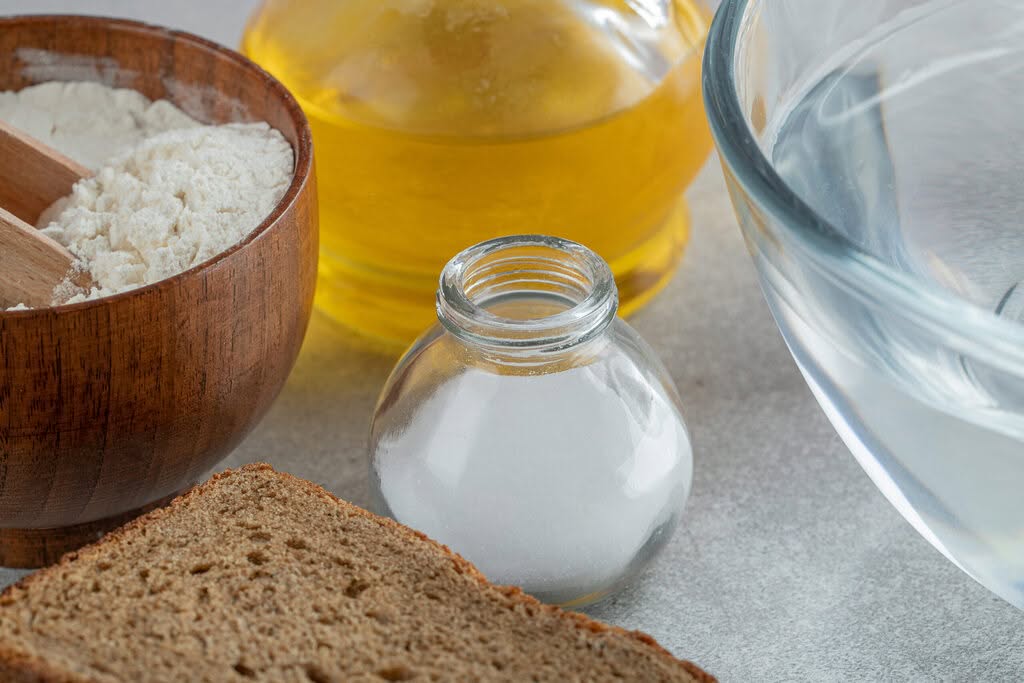
Functional fibers in pastry are non-digestible complex carbohydrates that play an active technological role beyond their nutritional contribution. Inulin adds body to creams, pectin structures gels, guar gum thickens sauces. They are distinguished from simple dietary fibers by their direct impact on texture, shelf life and stability of preparations.
When pastry wants to become lighter… without losing its soul
Until recently, talking about fiber in pastry would raise an eyebrow: too “nutritional,” not indulgent enough.
Then the constraints piled up : less sugar, less fat, clean-label requirements, health expectations, special-diet needs, cost pressure, and sustainability. And yet the customer still wants the same thing: fudginess, a long finish, and that “come-back-for-more” feeling — an intact experience and an authentic taste.
That’s when fibers changed status. From a marketing bonus, they became a formulation tool. Better yet : a lever for sensory design for chefs… and a driver of differentiation for brands.
The science behind the trend
Functional fibers: what are we really talking about?
Under the term fibers, we find very different ingredients, but with one thing in common: they interact with the other macronutrients in a recipe (water, lipids, proteins, starches) and change the texture.
We mainly find :
- Soluble fibers : inulin, acacia fiber, polydextrose…
- Insoluble fibers : bamboo, pea, certain fruit fibers…
- Mixed fibers : citrus fibers, apple fibers (often a mix of insoluble fibers and pectins)
Why does it work ? The 3 superpowers
- Water retention → softness, juiciness, shelf life, free water management, gelation
- Fat management → a sense of richness with fewer lipids
- Structuring → structure, slicing, stability (emulsions, doughs, batters)
The key: you don’t replace an ingredient. You replace the function of an ingredient in a specific recipe.
Nutrition (without myths)
Fibers = carbohydrates… but not sugars
Fibers belong to the carbohydrate family (because they are chains of sugars, often linked differently).
But, unlike simple sugars, they are little or not digested by our intestinal enzymes. They therefore pass through the small intestine largely intact.
As a result : they have nutritional benefits (satiety, regulation, digestion) and technological usefulness (water management, viscosity, structure).
Soluble vs. insoluble: what difference does it make ?
- Soluble fibers : disperse in water and can create viscosity.
- Nutrition : often more fermentable, with an impact on glycemic response.
- Tech : provide body, a more “creamy” mouthfeel, often thanks to gelation that absorbs water.
- Insoluble fibers: do not dissolve, but can retain water.
- Nutrition : digestive transit.
- Tech : structure, hold, “scaffolding” effect.
The microbiome : why everyone is interested in it
Some fibers (e.g., inulin/oligofructose) are prebiotic : they nourish the microbiota, which produces SCFAs (short-chain fatty acids) associated with beneficial effects (digestive, metabolic, etc.).
Not all fibers are equal : the effect depends on structure, solubility, and degree of fermentability.
Practical case: how fibers enhance flavor and texture
Objective #1: reducing sugar… without losing volume
Sugar does more than just add sweetness. It provides bulk, viscosity, water management, and part of the final texture.
Fibers can help rebuild this architecture :
- by adding body
- by modulating viscosity
- by improving water retention
Objective #2: reducing fat… without a “dry” effect
A reduction in fat quickly leads to: lack of roundness, short texture, and a dry mouthfeel.
Some fibers (long-chain inulin, mixed fibers) act as fat mimetics and restore length in the mouth. In practical terms, there is no magic: these fibers interact with water to create physical networks (gels, microcrystals, or hydrated matrices) that mimic certain sensory functions of fat.
- Long-chain inulin : when solubilized with heat, it partially recrystallizes upon cooling, forming a microcrystalline network capable of trapping water. This network increases viscosity and provides body and roundness, similar to a lipid phase.
- Mixed fibers (e.g., citrus, apple) : they absorb and immobilize water within the matrix. This “bound” water is no longer perceived as watery but as creamy, which extends mouthfeel.
Result: even with fewer lipids, the palate perceives a longer, more enveloping texture, because the product releases moisture and aromas more slowly — similar to a fat-rich system.
Objective #3: designing texture (not just “adding fibers”)
In advanced formulation, fibers become control levers:
- softness vs. chewiness
- structure vs. creaminess
- clean cut vs. “soft” texture
This is exactly where recipe development becomes exciting: it’s about ingredient systems and balance, not “random things to add.”

Practical guide: which fibers to choose, and how to use them ?
The dosages below are starting points for R&D recipe development. They vary depending on brand/quality, particle size, matrix (gluten-free, high-sugar, aerated, etc.), and processing conditions.
1) Citrus fibers (citrus fiber)
What they do best: emulsions!! Moisture retention + structuring (often rich in pectins + insoluble fibers).
Ideal for : emulsions and custards, reduced-fat products, mousses that need to remain soft.
Starting dosage: 0.5–2%.
Incorporation :
- Dry pre-mixing with powders.
- Hydration is possible in cold processing, but activation is often enhanced with heat.
2) Inulin: choosing the right type (this is where everything is decided)
Long-chain (native) inulin — structure & fat mimetic
Ideal for : heated creams and bases, ganaches, baked inserts, textures that need to “hold.”
Why : dissolves when heated, then forms a microcrystalline network upon cooling → body and fat-like mouthfeel.
Starting dosage : 2–6%.
Watch out : overdosing = risk of chalky, brittle texture.
Short-chain inulin / oligofructose — sweetness & nutrition
Ideal for : cold batters, mousses, meringues, unbaked inserts, flavor support.
Why : highly soluble in cold processing, provides slight sweetness (≈30% of sucrose) but little structure.
Starting dosage: 3–8%.
To watch: do not expect a fat-like texture or structure.
Cold-process inulin — ease of processing.
Ideal for : premixes, high-speed production, cold desserts where rapid dispersion is critical.
Starting dosage : 2–5%.
3) Apple fiber (apple fiber / pomace)
What it does best : water management (insoluble mix + soluble fraction such as pectins), supporting softness.
Ideal for : “better-for-you” cakes/muffins, soft biscuits, and certain doughs where moisture retention is desired.
Starting dosage: 1–3% (or 3–6% based on flour), then adjust through iterations.
Incorporation :
-
- Option: short pre-hydration (slurry) if the fiber is very fine.
Watch out : too high a level = densification, loss of volume, gritty mouthfeel.
4) Bamboo fiber
What it does best: structure (mostly cellulose), “framework” effect.
Ideal for : gluten-free, low-carb, structured biscuits, bases, matrices where structure and stability are key.
Starting dosage: 0.5–2%.
Incorporation :
- Always dry.
- Adjust water gradually (otherwise the product becomes dry/compact).
5) Pea fiber
What it does best : water absorption, structuring (not to be confused with pea protein).
Ideal for : enriched biscuits/cookies, bars, “better-for-you” bakery, GF systems in synergy with starches/hydrocolloids.
Starting dosage : 0.5–2% (or 2–5% on a flour basis).
Incorporation :
- Dry pre-mixing.
- A hydration resting time is useful to stabilize the dough.
Methods & key points to watch (very practical)
- Always think “water” : a fiber that works is a fiber whose hydration is under control.
- Lumps: premix dry, or use a short slurry if needed.
- Overdosing: most “fiber failures” come from excess (density, hardness, dry mouthfeel).
- Simple measurements : consistency, baking loss, texture at Day +1 / Day +7, water activity (aw) if needed.
Business & innovation : why it’s a strategic lever
For a brand, mastering functional fibers means :
- Accelerating premium light product ranges (without “sensory punishment”)
- Securing sugar and fat reformulations with a technical approach
- Creating a signature texture in saturated markets
- Meeting health expectations without guilt-inducing messaging
It’s not a gimmick trend. It’s a competitive advantage… as long as you know how to choose and manage them.
Conclusion: tomorrow’s pastry will be better designed
Functional fibers are neither magical nor universal. Poorly chosen, they harden textures. Poorly hydrated, they dry products out. Overused, they “break” indulgence.
But when properly integrated, they become a powerful tool : reducing sugar and fat, improving stability, extending shelf life, and above all, designing a truly desirable texture.
👉 If you are developing a product range, a signature recipe, or a “light yet indulgent” innovation, I can support your teams (R&D, chefs, marketing) in selecting the right fibers, building a coherent ingredient system, and developing lighter recipes without losing their pleasure-driven DNA.
Related articles

