


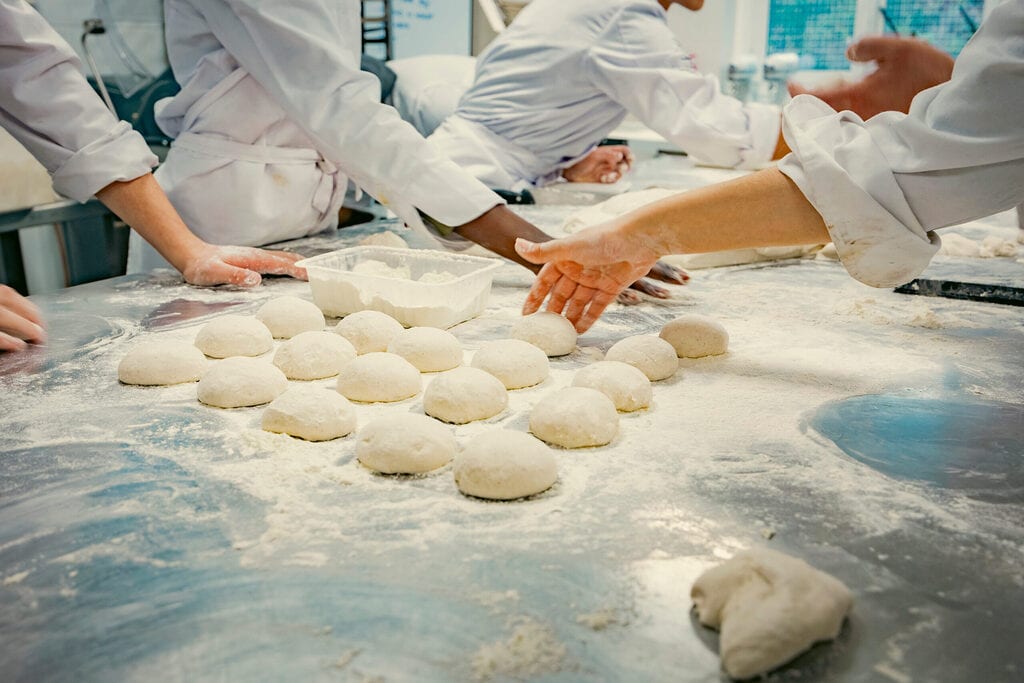
Gluten-free, lactose-free and sugar-free pastry encompasses all formulation techniques that substitute allergenic or glycemic ingredients with functional alternatives. It relies on a reformulation logic, not simple substitution: each removed ingredient modifies the structure, texture and shelf life of the final product.
Substitution table: functional equivalents
| Classic ingredient | Substitute | Role compensated | Key consideration |
|---|---|---|---|
| Wheat flour | Gluten-free mix + xanthan gum | Structure, protein network | Entire recipe architecture must be rethought |
| Butter | Coconut oil / nut paste | Body, emulsion, flavor | Different behavior per application |
| Refined sugar | Erythritol / agave syrup / dates | Sweetness, hygroscopicity, structure | Recalibrate hydric and thermal balance |
| Milk / cream | Coconut cream / oat milk | Emulsion, creaminess | Different emulsifying behavior |
Your client orders a financier and specifies: gluten-free, lactose-free, ideally without refined sugar. You smile, but you know this request can’t be met not with your current repertoire, not in your class notes, not in the textbooks you relied on during your training.
It’s not a lack of talent, but a lack of knowledge being passed on.
Pastry schools train excellent technicians of butter, flour, and sugar, but rarely formulators capable of creating “free-from” products.
Yet in a coffee shop, “free-from” is no longer an exception : it has become a commercial standard.
What school didn’t teach you
The traditional curriculum CAP, BTM, vocational baccalaureate, and even some advanced certifications is built on a fundamental foundation : butter, wheat flour, eggs, white sugar.
These four pillars shape the entire curriculum. They are taught for what they provide : binding, texture, sweetness balance, and structure. But never for what they represent : potential constraints.
The consequence is clear : a pastry chef trained under these standards has no technical deficit, but lacks the conceptual framework to think differently.
Replacing butter with coconut oil is not something you can improvise.
Substituting wheat flour with a gluten-free blend requires rethinking the entire structure of the recipe.
Eliminating refined sugar without compromising taste or texture follows a completely different logic.
The concrete cost is immediate: a makeshift “free-from” offering is visible, noticeable on the palate, and can damage the establishment’s reputation.
In an environment where Google Maps and Instagram reviews influence every decision, a gluten-free madeleine that crumbles or a sugar-free brownie that falls flat can cost far more than offering no alternative at all.
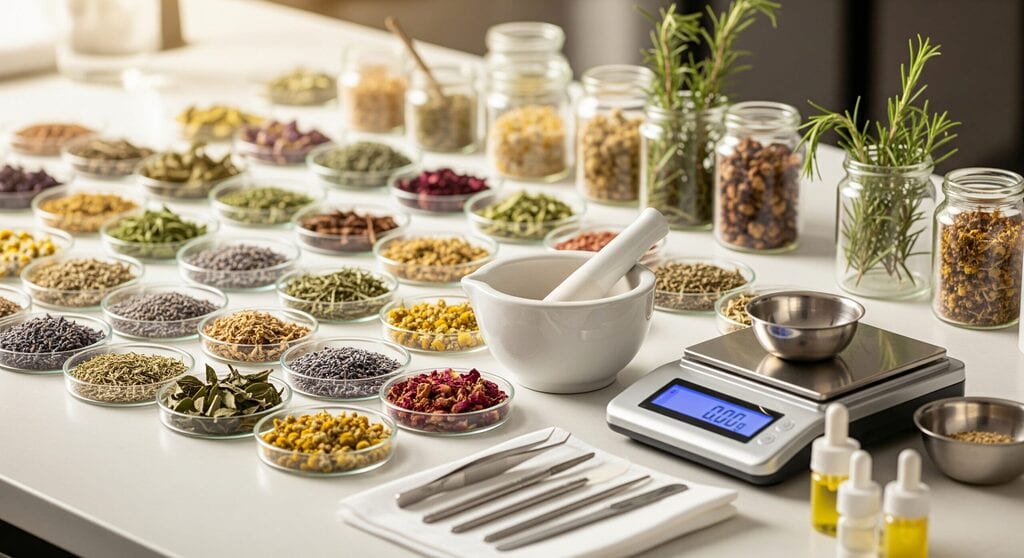
Three constraints, three distinct technical approaches
1 – The most common mistake is treating alternative formulations as simple substitutions.
Removing gluten, for example, means eliminating the protein network that gives structure to a dough.
No single ingredient can replace it exactly : you have to compensate with a blend of alternative flours, gums, or binding agents, each with its own behavior during baking, freezing, and shelf life.
2 – Formulating without lactose requires understanding the emulsifying and flavor roles of dairy fats.
Plant-based alternatives (oils, nut butters, coconut creams) react differently depending on whether they’re used in a cream, ganache, or biscuit and each application requires a specific adjustment.
3 – Removing refined sugar is undoubtedly the most complex constraint.
Sugar isn’t limited to its sweetening function : it’s hygroscopic, it caramelizes, it preserves, and it provides structure.
Replacing it with agave syrup, erythritol, or dates requires recalibrating the entire moisture and thermal balance of the recipe.
Mastering these three approaches separately is already demanding.
Combining them to create a product that is both gluten-free, lactose-free, and sugar-free requires a solid understanding of how the different substitutes interact with one another.
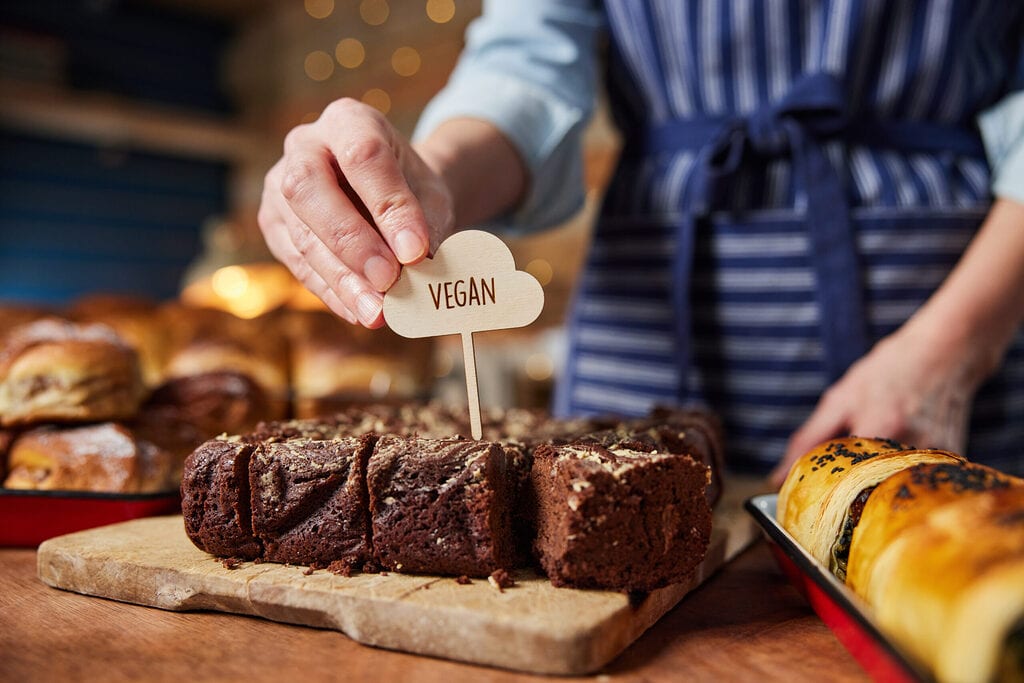
What this changes for your coffee shop offering
A coffee shop that masters alternative formulations doesn’t just “meet a demand” : it takes a position. Whether in a mid-sized city or a Parisian district, offering a coherent display becomes a real differentiator compared to competitors who simply stick a “gluten-free available” note on the counter.
The impact on margins is real as well.
Well-designed alternative products can be sold at a higher price, are perceived as premium, and build loyalty among customers who struggle to find what they’re looking for elsewhere.
Training your team, or training yourself, allows you to expand into a high perceived-value range without any additional equipment investment.
It’s also a matter of brand consistency. The coffee shops that succeed today don’t treat alternatives as a side option : they make them an integral part of their identity.
Conclusion
The gap isn’t inevitable.
It simply shows that professional pastry is evolving faster than its training programs.
Professionals who understand the chemistry of substitutions and can formulate with both rigor and creativity have a clear advantage in their market.
If you run a coffee shop or support a kitchen team, and alternative formulations are still a weak point in your skills or those of your collaborators, that’s exactly what we work on together.
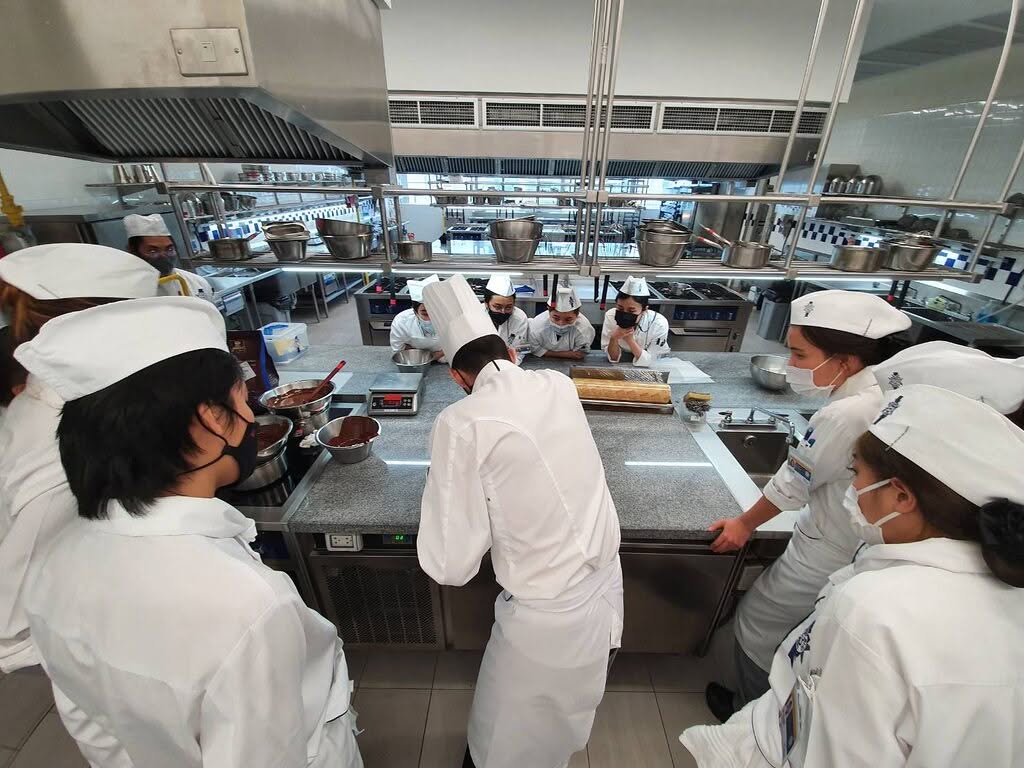
A tailor-made training program :
Learn how to formulate gluten-free, lactose-free, with reduced sugar or completely sugar-free options, while achieving results that match your positioning. 🍰
Get in touch to discuss it : every training program is fully personalized !
Related articles
Frequently asked questions: gluten-free, lactose-free and sugar-free pastry
To master plant-based substitutions in a hands-on setting, discover our vegan pastry course.

