


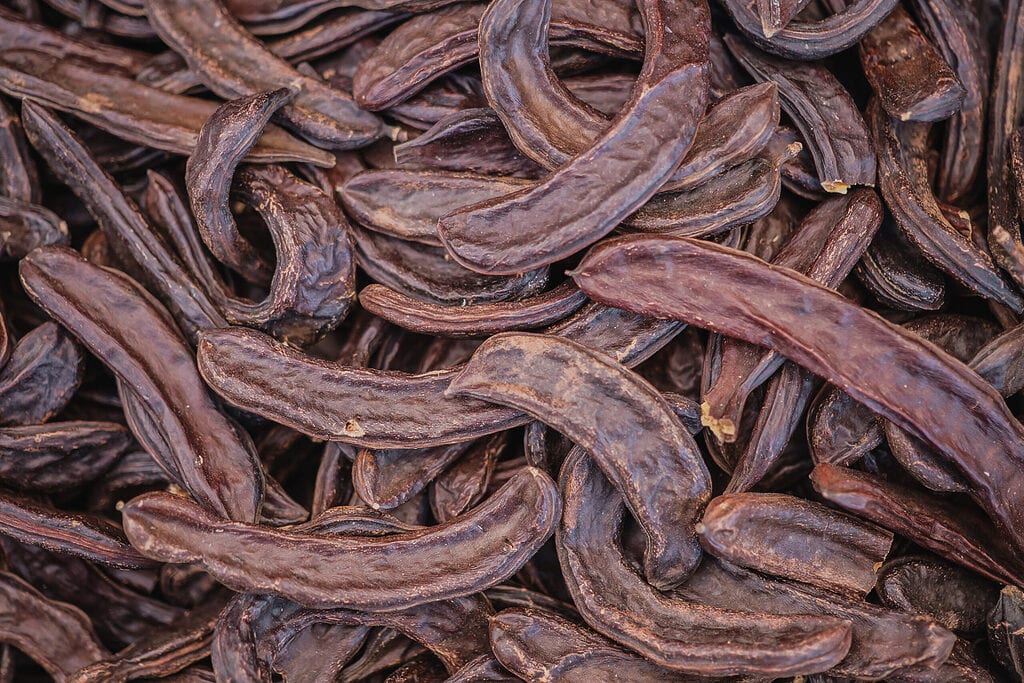
Carob is a natural alternative to cocoa from the Mediterranean basin, naturally sweet, free from caffeine and theobromine, rich in fiber (30 to 40%) and with a low environmental footprint. In professional pastry, it replaces up to 50% of cocoa in biscuit, mousse and cream recipes, while providing softness, natural color and stability.
A new serious contender to replace cocoa
What if the next chocolate revolution came from the Mediterranean? Far from tropical plantations, carob is emerging as a concrete, accessible, and sustainable ingredient. Long considered a mere substitute, it is now recognized as a technological and nutritional tool for healthier, plant-based, and responsible pastry. While the cocoa industry faces a major crisis — dwindling resources, rising costs, environmental pressures, and ethical challenges — carob positions itself as a realistic and strategic alternative. It partially replicates the sensory experience of cocoa, without caffeine or theobromine, while offering a significantly lower environmental impact.
From cocoa to carob : rethinking a sustainable model
The limits of industrial cocoa
Cocoa is produced 70% in West Africa, under increasingly fragile conditions :
- Unstable yields linked to climate change.
- Massive deforestation to expand cultivation.
- Precarious social conditions for producers.
- Volatile prices that weaken the entire supply chain.
Result : manufacturers are looking to secure their supply sources. Carob, grown locally in the arid regions of the Mediterranean, emerges as a credible and sustainable solution.
The carob tree : a resilient and low-maintenance tree
Cocoa vs carob yield comparison
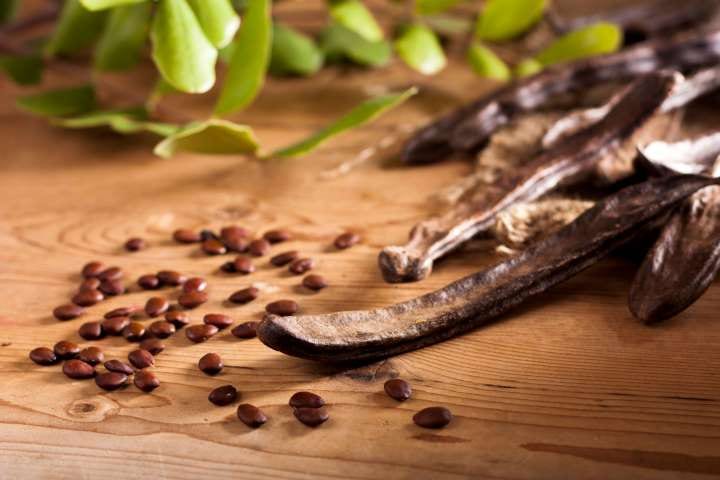
- Cocoa tree : produces on average 0.5 to 2 kg of dry beans per year, or about 350 kg/ha of commercial cocoa.
- Mature carob tree : yields 50 to 100 kg of pods per year, of which about 40% is usable pulp, equivalent to 2 at 4 tons of processable material per hectare.
On the same area, a carob orchard can produce up to ten times more ready-to-use raw material than cocoa, with less water, no pesticides, and minimal maintenance.
The carob tree (Ceratonia siliqua L.) grows on poor soils, withstands drought, and requires neither intensive irrigation nor chemical inputs. It sequesters carbon, enriches the soil, and reduces erosion. Each tree produces up to 100 kg of pods per year, which can be processed into flour, syrup, or gum. A stable, local, low-carbon resource, perfectly suited to the agri-food transition.
Nutritional profile and functional properties
A balanced and useful composition for formulation
| Component | Average content | Function in pastry |
|---|---|---|
| Fibers | 30–40 % | Water retention, softness, shelf life |
| Natural sugars | 40 % | Sweetness, natural color |
| Proteins | 4–5 % | Structure, lightness |
| Lipids | <1 % | Low energy density |
| Polyphenols | 1–5% | Antioxidants, flavor, stability |
This composition makes carob versatile and functional : it adds texture, stabilizes, provides color, and naturally sweetens.
Compared to cocoa
- Lower in fat : 1% vs. 20%.
- Higher in fiber : 35% vs. 30%.
- Caffeine- and theobromine-free.
- Naturally sweet, reducing the need for added sugars.
- Richer in calcium and potassium.
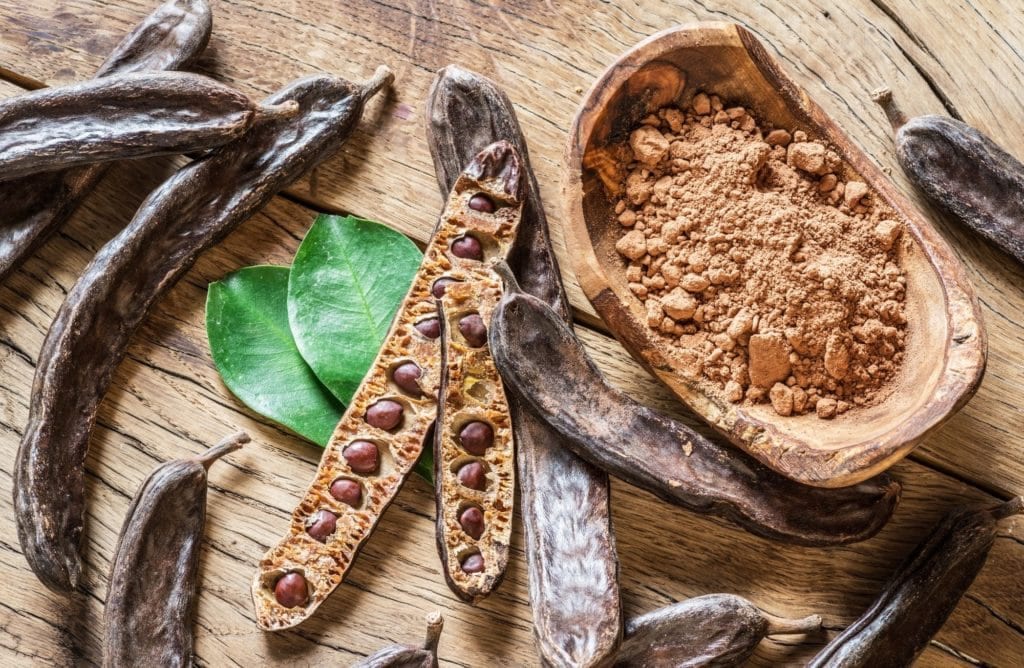
Result: products that are lighter, more digestible, and suitable for healthy, sporty, and plant-based pastries.
Flavor profile and baking behavior
- Before roasting : mild, slightly fruity taste.
- After roasting : notes of caramel, date, fig, and honey.
- Sensory advantage : balanced flavor, without excessive bitterness.
- Technical advantage : its soluble fibers (pectins and galactomannans) create a hydrophilic network that traps water. Cocoa, being drier, retains less, resulting in crumblier textures.
Result : products that are softer, more colorful, and more stable over time.
Market and trends : the rise of “carob power”
Between 2020 and 2025, carob-based innovations increased by more than 150% (source: Mintel). Brands are using this ingredient across several segments :
- Alternative chocolates and cocoa-free confections.
- Functional snacks high in fiber.
- Plant-based and allergen-free pastry.
- Clean-label desserts and simplified formulations.
consumers are now looking for :
- natural and minimally processed products ;
- a low carbon footprint ;
- a storytelling of origin and terroir.
Morocco, Spain, Portugal, and Italy account for nearly 90% of global production. In France, trials are multiplying in Provence and Corsica. The tree, hardy and low-maintenance, adapts perfectly to a warming climate: a potential pillar of a new Mediterranean taste economy.
Pastry applications : from lab to plate
A versatile ingredient
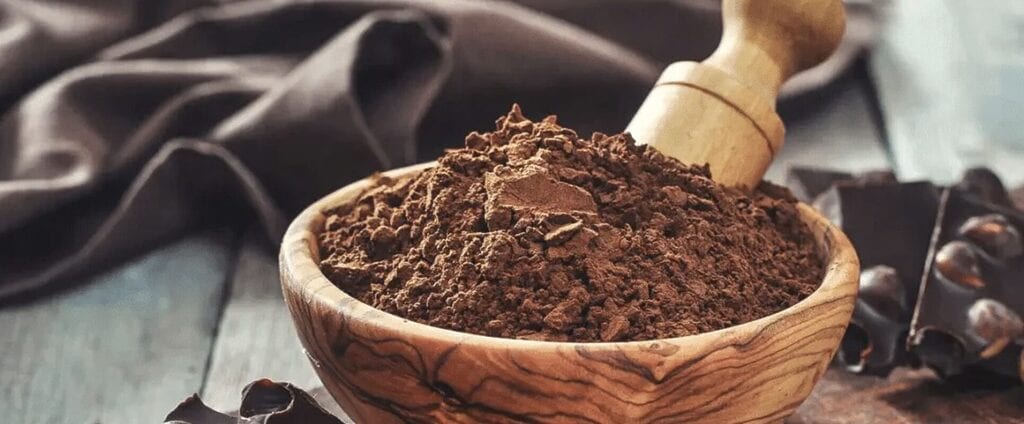
- Can replace up to 50% of cocoa in cakes, cookies, mousses, or creams.
- Provides softness and natural color.
- Stabilizes ganaches and creams without added gelling agents.
- Adds body to reduced-sugar recipes.
- Enables cleaner-label and more sustainable formulations.
Key flavor pairings
- Carob & orange : freshness and sweetness.
- Carob & coffee : aromatic depth.
- Carob & hazelnut : balanced indulgence.
- Carob & citrus : tangy contrast.
Technological advantage
- Carob fibers retain moisture thanks to their pectins and galactomannans, forming a hydrophilic network that traps water during baking.
- Cocoa, being drier and less hydrophilic, produces denser textures.
- This behavior ensures softer, fresher, and more durable products with fewer additives.
Outlook : toward a circular economy of taste
Carob embodies the convergence of food innovation and sustainability :
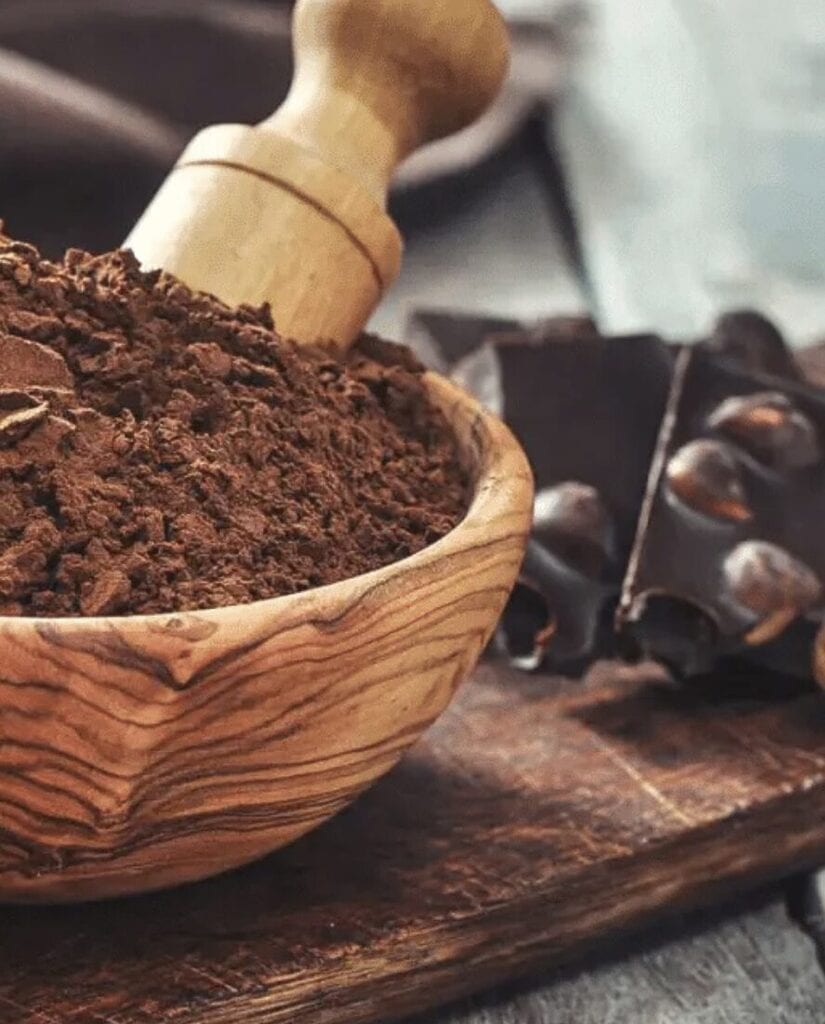
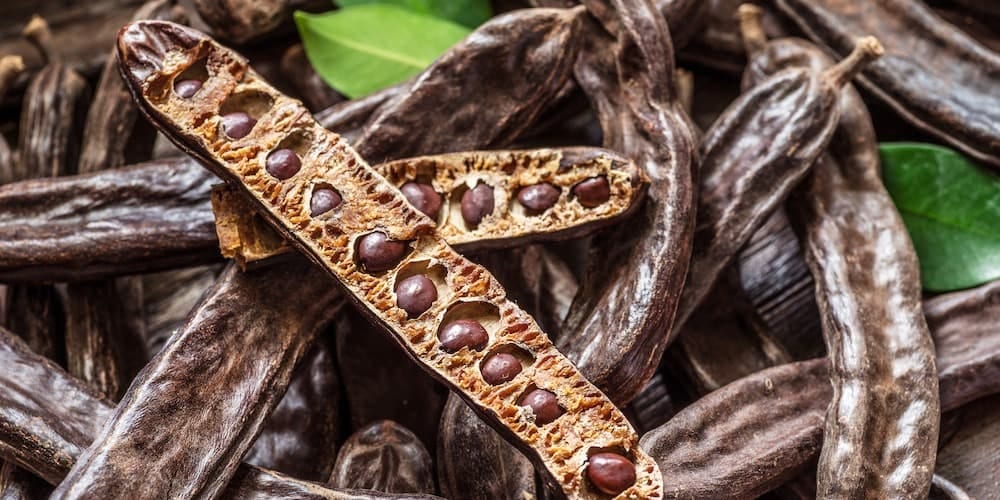
- Pulp → flour, syrup, base for beverages and confectionery.
- Seeds → locust bean gum (E410), a natural thickener for creams, ganaches, ice creams, and sauces.
- By-products → compost, energy biomass, animal feed.
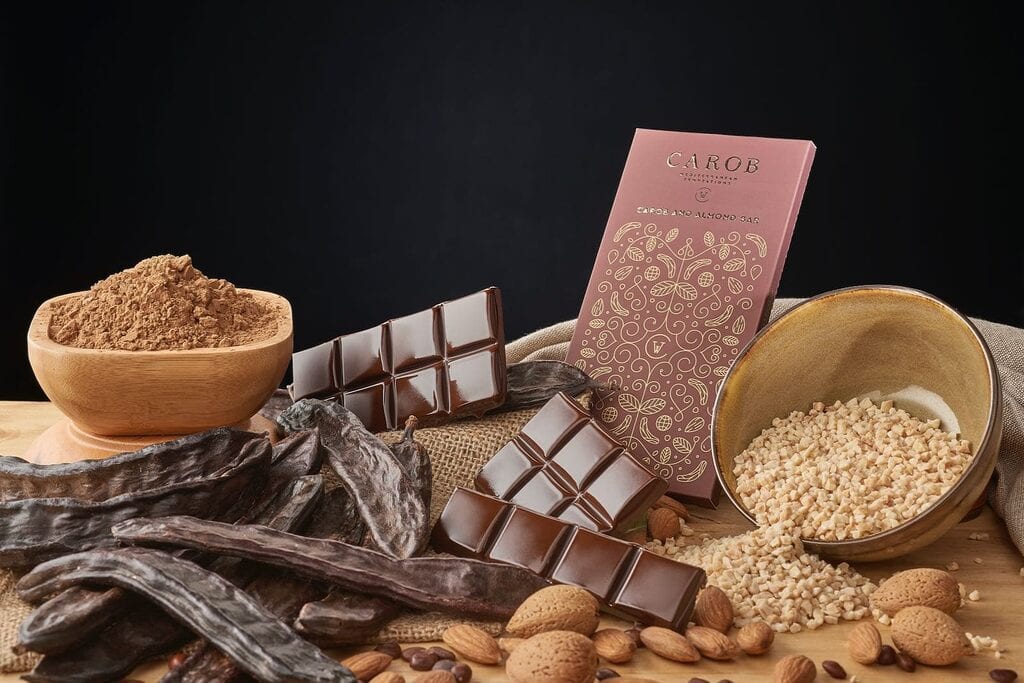
This zero-waste, local, high value added raw material offers brands and artisans a strategic opportunity : to diversify supply sources, reduce environmental impact, and strengthen differentiation in the face of the cocoa crisis.
Conclusion : a new path for responsible pastry
Carob is no longer just a cocoa substitute: it is an ingredient of the future, combining sustainability, functionality, and sensory pleasure. It meets the expectations of healthier, less sweet pastry rooted in Mediterranean terroir. By relying on local crops and simple processes, it charts a concrete path toward sustainable indulgence : tasting right, consuming better.
Related articles
Frequently asked questions: carob in professional pastry
To go further in a training setting, discover our healthy pastry & nutrition course.

