


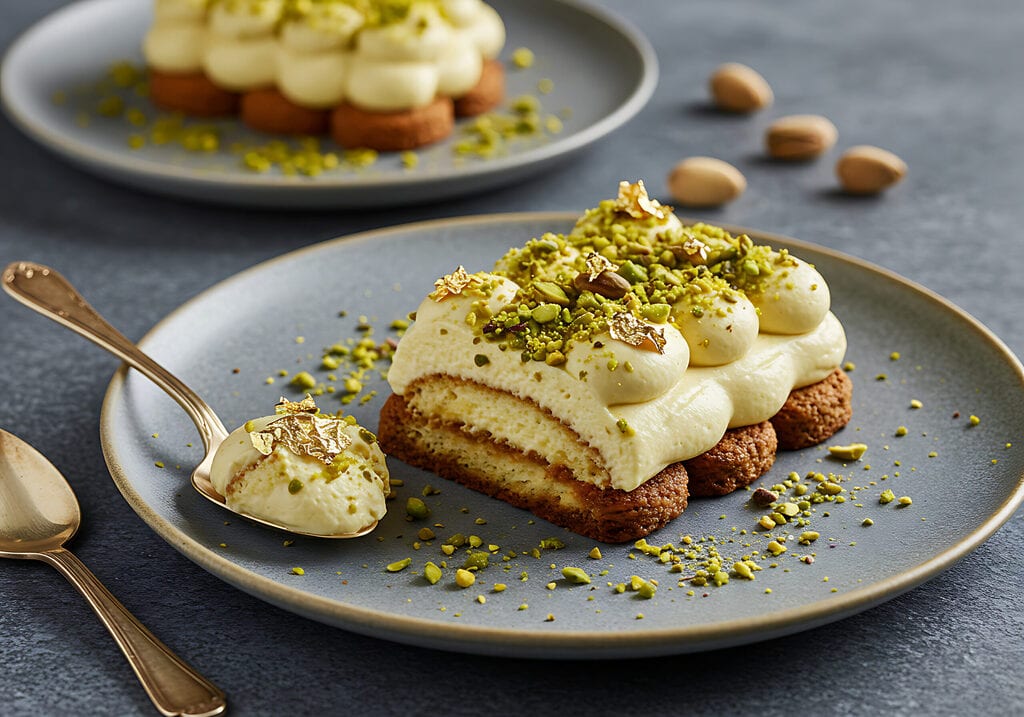
Professional recipe in verrines · Serves 6
I regularly work with hotel teams and restaurants looking to modernize their dessert menus without losing clarity for the customer.
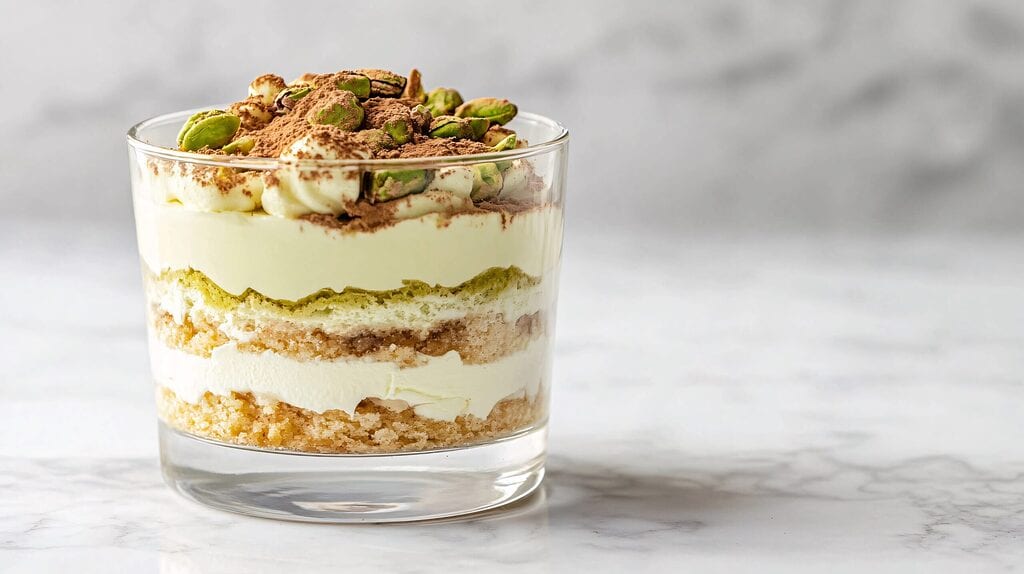
Pistachio tiramisu perfectly addresses this challenge: it builds on a universally recognized dessert and gives it a contemporary identity through pistachio, a touch of acidity from raspberry, and a crunchy texture that surprises with every bite.
This recipe is built around five distinct components, each playing a precise role in the final balance.
Below is the full formulation for 6 individual verrines, with exact measurements and key technical points.
Pistachio Chantilly: Creamy Base with Stable Structure
This is the core element of the dessert. It must be light yet stable, with a clear pistachio flavor that does not overpower the other components. The combination of 35% cream and mascarpone is a reliable classic : mascarpone provides structure and density, while cream ensures proper aeration.
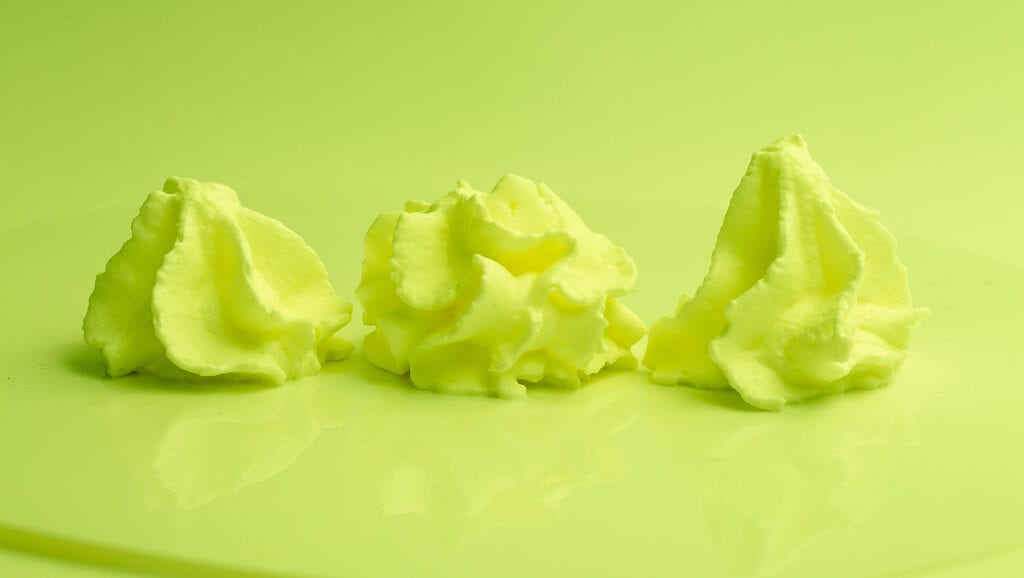
Pistachio Chantilly · 6 verrines
| Ingredient | Quantity | % recipe |
| 35% Fat Liquid Cream | 222 g | 73,30% |
| Mascarpone | 30 g | 9,77% |
| 100% Pistachio Paste | 24 g | 8,86% |
| Sugar | 24 g | 7,33% |
| Chantifix | 2,4 g | 0,73% |
| Total | 300 g | 100% |
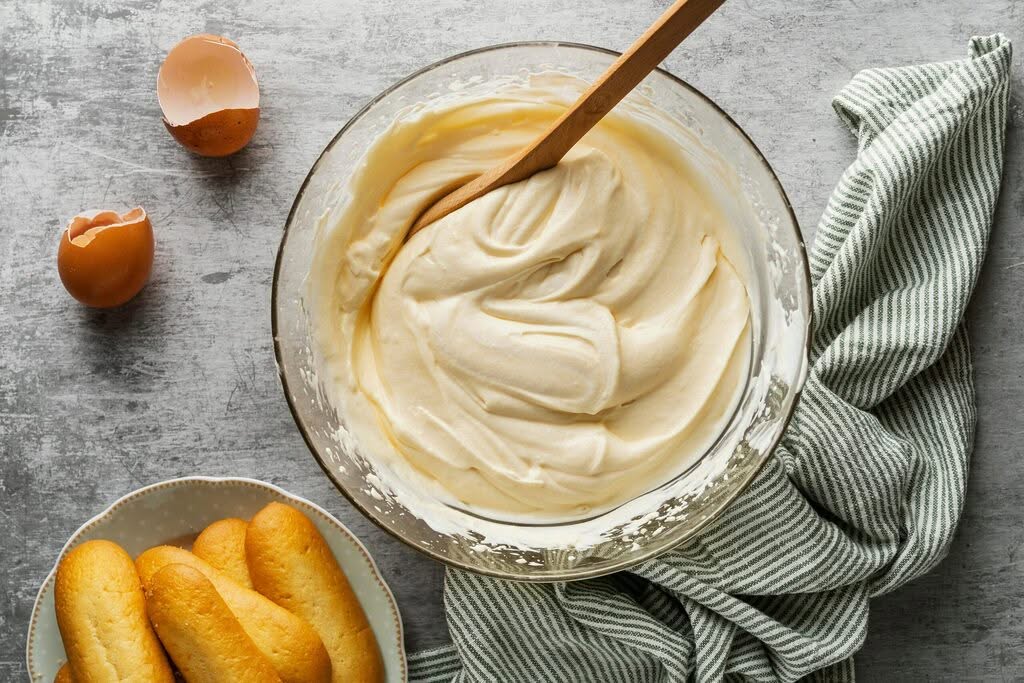
TECHNICAL POINT
Chantifix (a modified starch stabilizer) is essential in a hospitality setting : it ensures the whipped cream holds for several hours after plating.
Always use a 100% pure pistachio paste, with no added sugar or palm oil.
Raspberry Coulis: Controlled Acidity and Smooth Texture
Raspberry provides balance. Pistachio is rich, sweet, and slightly bitter. Raspberry cuts through this richness with acidity and adds a contrasting aromatic dimension that makes the dessert more dynamic.
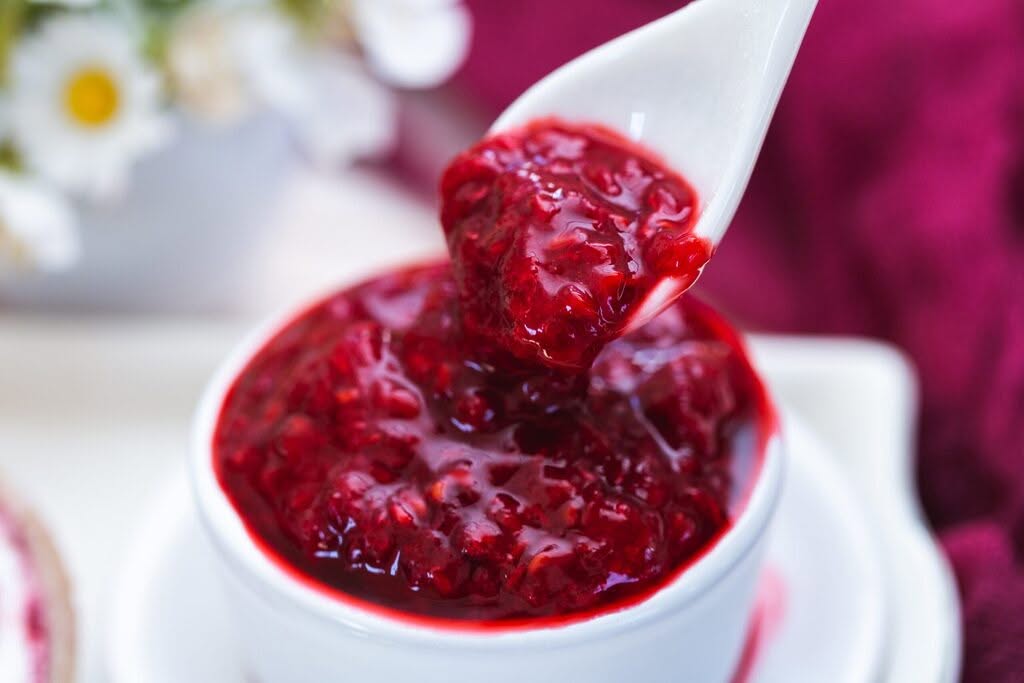
Raspberry Coulis · 6 verrines
| Ingredient | Quantity | % recipe |
| Raspberry purée | 78 g | 89,09% |
| Sugar | 4,2 g | 4,45% |
| NH Pectine | 0,6 g | 0,89% |
| Pure Lemon Juice | 0,6 g | 0,89% |
| Invert sugar (trimoline) | 4,2 g | 4,45% |
| Guar gum | 0,18 g | 0,23% |
| Total | 90 g | 100% |
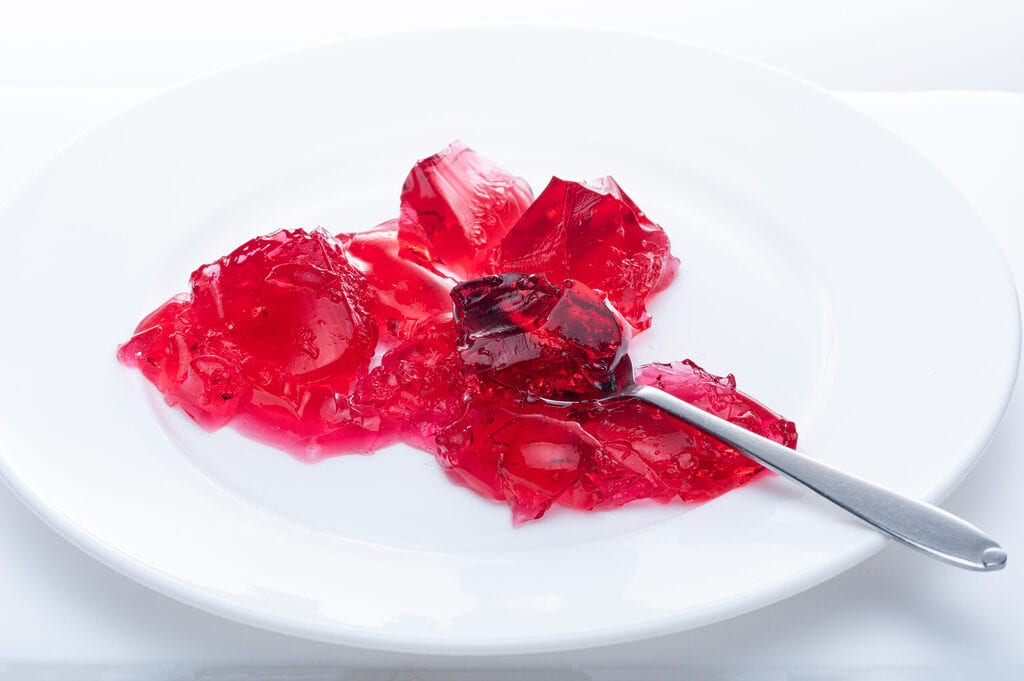
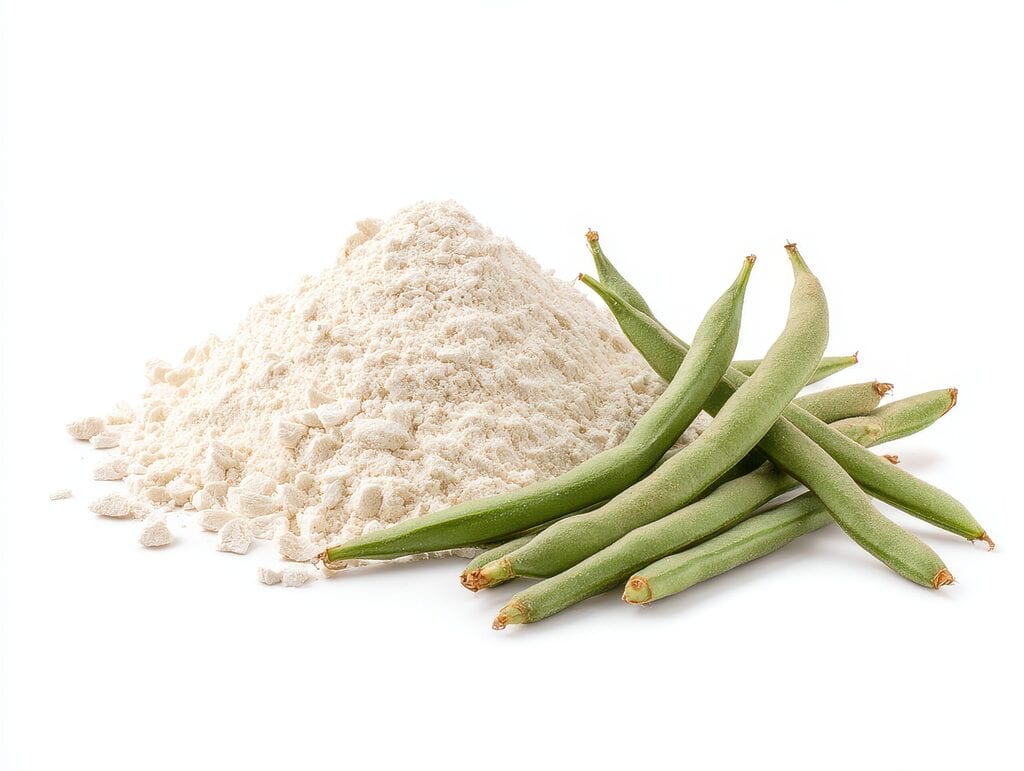
WHY NH PECTIN AND GUAR GUM ?
NH pectin is thermoreversible : it sets when cold and slightly loosens at room temperature, creating a glossy, fluid yet stable texture.
Guar gum increases viscosity when cold.
Trimoline prevents sugar recrystallization and adds shine.
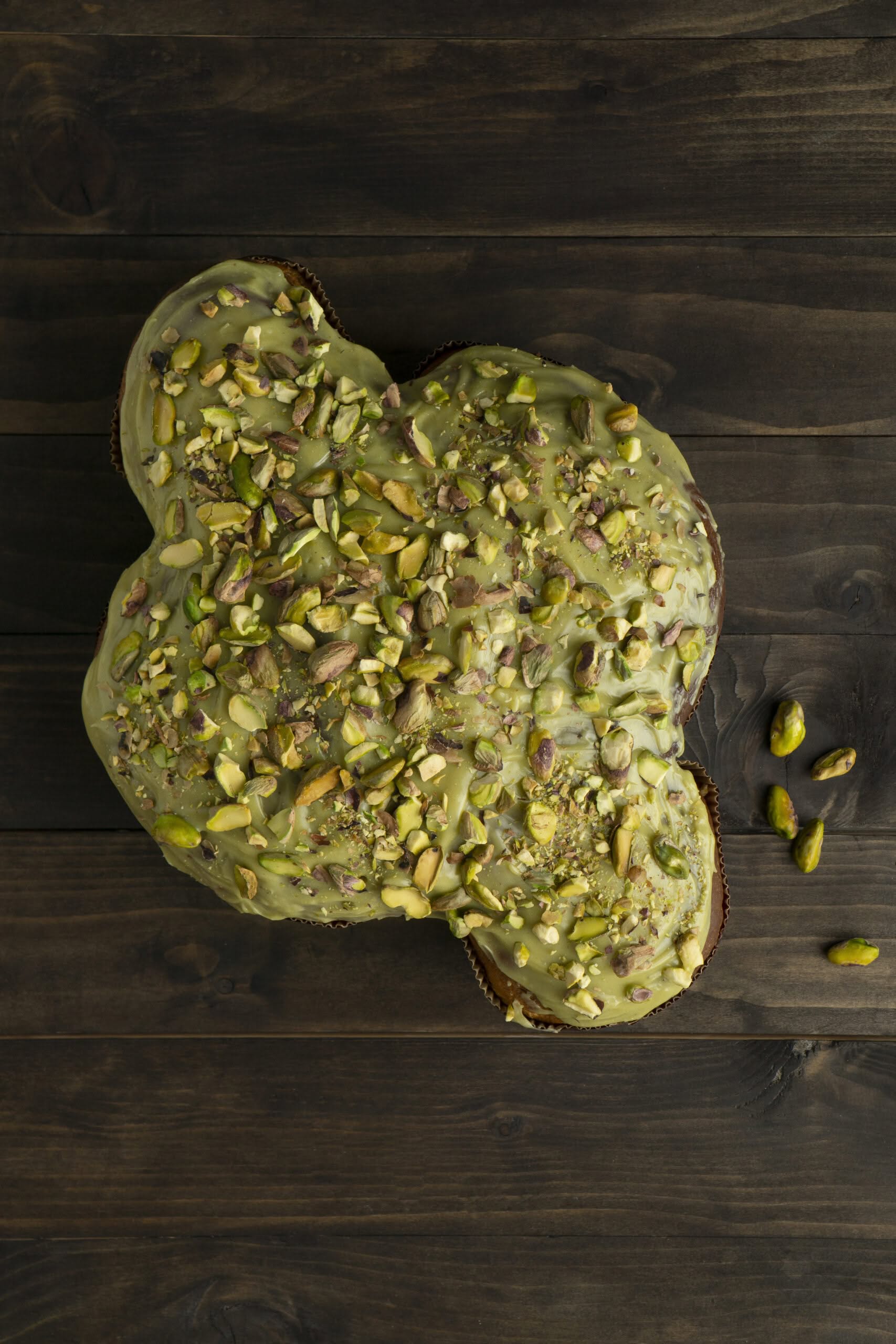
Pistachio-Almond Crunch
This is what turns the dessert into a memorable experience. Two additions of cocoa butter are used : the first coats the nuts while hot to waterproof them, the second is added with white chocolate to crystallize the mixture and ensure crispness.
Pistachio-Almond Crunch · 6 verrines
| Ingredient | Quantity | % recipe |
| Crushed pistachios | 12 g | 20,00% |
| Chopped almonds | 12 g | 20,00% |
| Water | 6 g | 10,00% |
| Sugar | 18 g | 26,67% |
| Cocoa butter (1) | 1,8 g | 3,33% |
| White chocolate (35%) | 12 g | 16,67% |
| Cocoa butter (2) | 1,8 g | 3,33% |
| Total | 60 g | 100% |
Pistachio Praline · 6 verrines
| Ingredient | Quantity | % recipe |
| 100% Pistachio Paste | 6 g | 29,90% |
| Hazelnut paste | 6 g | 19,30% |
| Pistachio-almond crunch | 12 g | 40,64% |
| Sugar | 3 g | 10,16% |
| Total | 30 g | 100% |
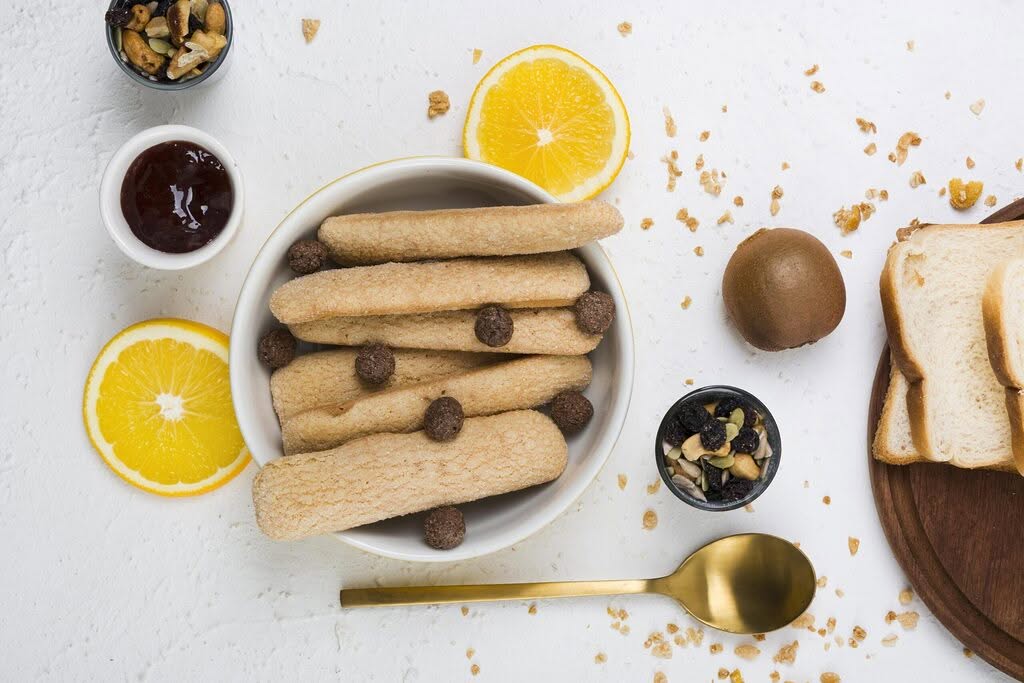
Ladyfinger Biscuit · 6 verrines
| Ingredient | Quantity | % recipe |
| Ladyfinger biscuit | 90 g | 100% |
| Total | 90 g | 100% |
Assembly in Verrines · 2 Layers
From bottom to top :
01 Ladyfinger biscuit 15 g
02 Raspberry coulis 15 g
03 Pistachio-almond crunch · 10 g
04 Pistachio praline 5 g
05 Pistachio mousse 50 g
06 Ladyfinger biscuit 15 g
07 Pistachio praline 5 g
08 Pistachio mousse 50 g
09 Raspberry coulis 15 g
10 Pistachio-almond crunch · finishing
Storage and Service
This dessert can be stored for 24 hours in refrigeration without loss of quality. For buffet service or large-scale production, add the final crunchy layer at the last moment to preserve texture.
Conclusion
This pistachio tiramisu is a strong example of structured pastry design : each component has a clear function, textures complement rather than compete, and the dessert remains stable over time. It is easy for the customer to understand, technically reliable, and adaptable to seasonal variations.
This is the approach I apply in all my R&D work : creating recipes that perform in real production environments, not just in the lab.
Related articles

