


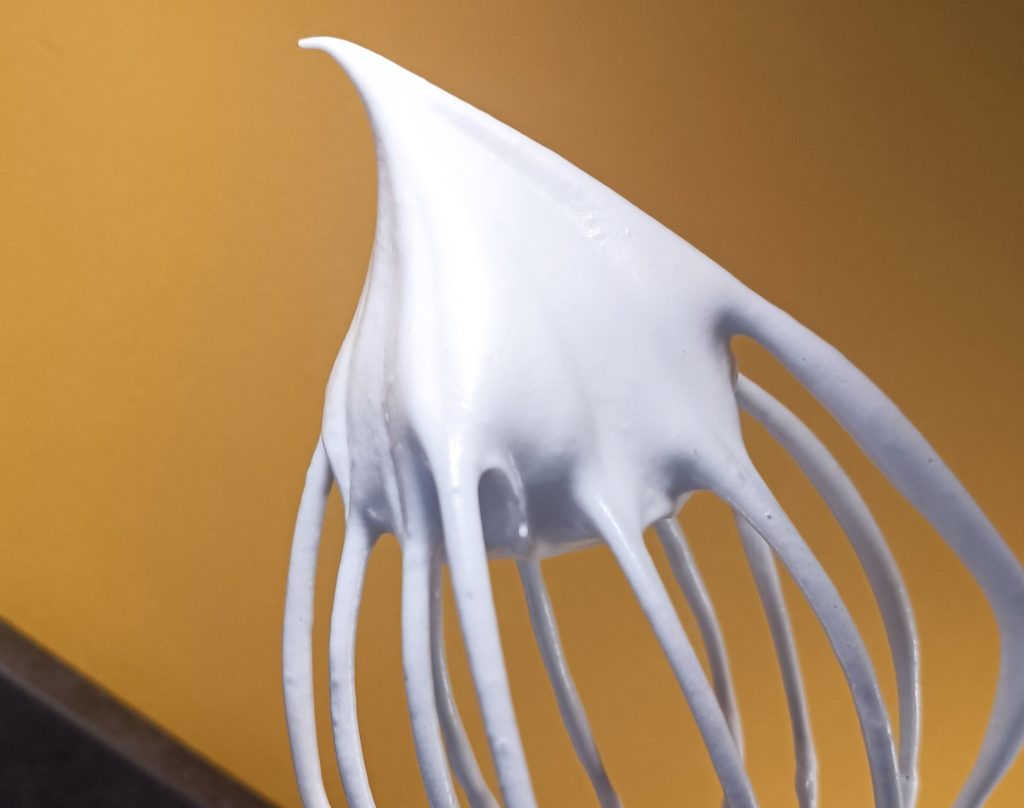
A perfect meringue is a protein foam stabilized by heat, produced by whipping egg whites (or aquafaba) with sugar according to a precise method. The three main types (French, Swiss, Italian) differ in their production technique, stability and intended application. Each parameter, from fat traces to ambient humidity, directly affects the final result.
Meringue, that classic pastry, is often too quickly dismissed as “egg whites whipped with sugar.” However, behind this apparent simplicity lies a true pastry technology, where each ingredient, each step, and each parameter plays a fundamental role in the success or failure of the preparation.
In this article, I invite you to look beyond appearances and explore what really makes a meringue: its structure, the proteins it contains, the role of air, temperature, stabilizing agents, and possible variations, particularly in vegan versions. Whether you’re a pastry chef, restaurant chef, trainer, or just a curious enthusiast, here’s everything you need to know to never mess up a meringue again.
What exactly is a meringue?
From a technical point of view, a meringue is a foam, i.e., a system in which a gaseous phase (air) is dispersed in a liquid phase (the water contained in egg whites or fruit purée). The stability of this foam depends mainly on the ability to trap and stabilize the air in this liquid structure.
The central role is therefore played by proteins, particularly ovalbumin, which is found in egg whites. These proteins form a network that coats the air bubbles, stabilizes them, and gives the meringue its soft or firm texture, as needed.
How does meringue “rise”?
The foaming phenomenon is based on the mechanical action of the whisk (manual or electric), combined with the presence of a foaming agent, such as egg white proteins. Whisking incorporates air into the mixture. The proteins spread across the surface of the bubbles, aggregate, and form a membrane around them, preventing them from bursting.
But be careful: the right amount of expansion is a question of balance. Too little, and the foam is unstable; too much, and the structure collapses or becomes grainy.
What makes a meringue hold together
Once whipped, meringue remains fragile. To ensure it holds its shape over time—and, above all, can be worked with (piped, baked, mixed, etc.)—its structure must be stabilized. This involves:
- The addition of sugar, which increases the viscosity of the aqueous phase and forms a syrup around the bubbles.
- An acidic agent (such as lemon juice, citric acid, or tartaric acid), which delays protein coagulation and makes them more flexible.
- Sometimes, additional proteins in the form of egg white powder are added to strengthen the protein network, especially with pasteurized egg whites.
By increasing the viscosity of the liquid and the strength of the membrane around the air bubbles, both the stability and malleability of the meringue are improved.
Overbeating your meringue: a common mistake
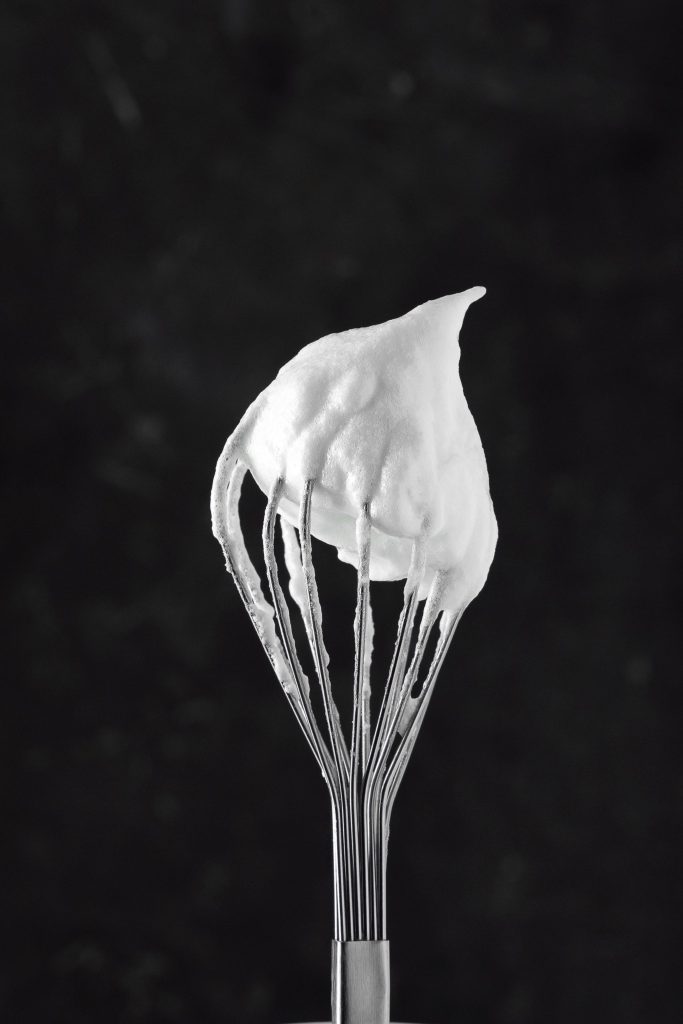
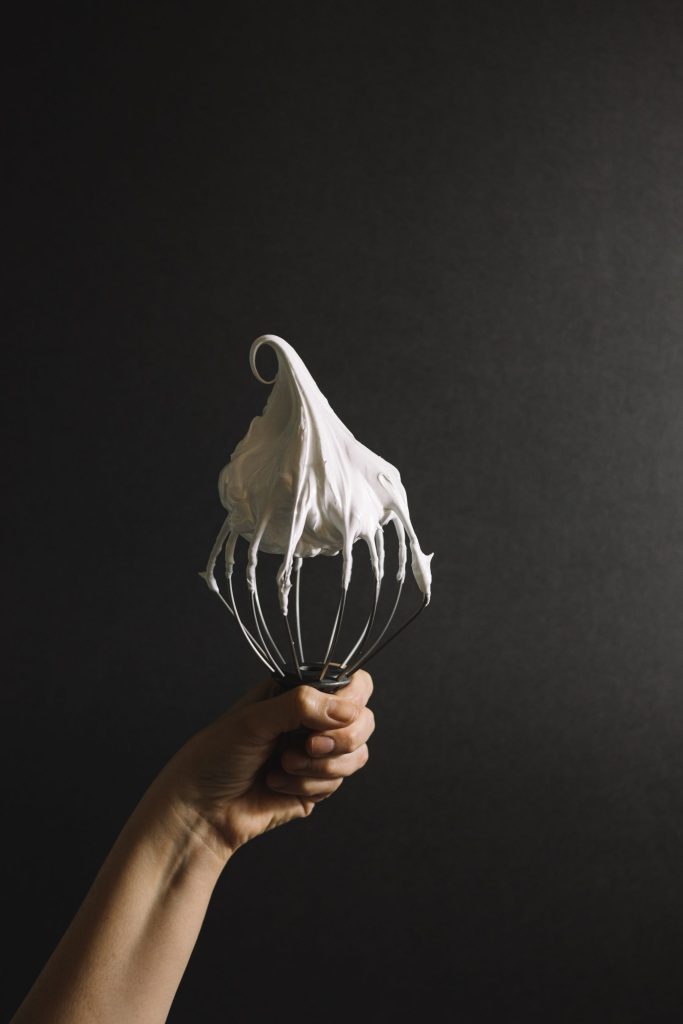
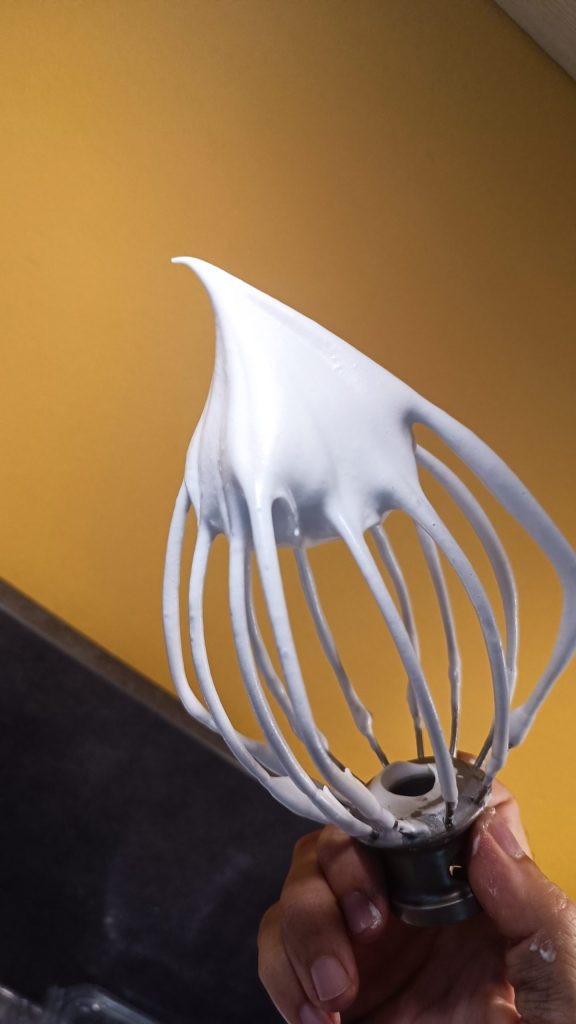
Excessive foaming may look appealing (large volume, neat bird beaks, etc.), but the structure then becomes fragile.
Here are the signs of overbeaten meringue:
- Formation of clumps on the edges of the bowl.
- Loss of shine, dry or brittle appearance.
- Lack of flexibility when incorporated into other preparations (mousses, cookies, etc.).
- And above all, final loss of volume after baking or resting.
The ratio between air bubbles and liquid phase is unbalanced, making the meringue unstable. The key is to find the right stopping point, before overwhipping.
The professional method for a successful meringue
Here is my method, tested in the kitchen:
- Use pasteurized egg whites (for hygiene reasons in a professional environment), slightly warmed to 30°C.
- Add a small amount of egg white powder at the beginning to compensate the denaturation of proteins due to pasteurization.
- Add an acid (0.1% citric or tartaric acid) to delay coagulation and keep the meringue flexible.
- Start at medium speed for 3 to 4 minutes, then switch to maximum speed.
- Add the sugar when the whites are foamy, and wait until all the crystals have dissolved.
- Stop the mixer immediately once the texture is perfect, and use the meringue right away.
This method guarantees smoothness, glossiness, and consistency, whether for baking or incorporating into another preparation.
How about a plant-based meringue?
The principles are the same: animal proteins are replaced with plant proteins, and stabilizers are added.
Here are the highlights:
- Potato protein: mild flavor, good coagulation capacity when cooked.
- Dosage: 3 to 5% depending on the desired texture.
- The addition of xanthan gum (0.3%) increases viscosity and improves foam stability.
- Citric or tartaric acid (0.1%): as for egg whites.
- Same process: average speed → maximum speed, gradually adding sugar.
With this version, you can create fruit mousses, meringue biscuits, sponges, pavlovas, and even plant-based macarons, without compromising the texture or consistency.
Key points to remember
The success of a meringue depends on a detailed understanding of its internal balance. It is not a static formula, but a dynamic system that depends on:
- the choice of proteins,
- temperature,
- sugar ratio,
- whipping process management,
- and the stability needed for the application.
Whether you’re making the traditional or vegan version, precise measurements are key. Each ingredient has a specific function, and every step is important.
To go further: the full video
I explain all this in detail, with accompanying gestures, in a dedicated video that you can find here:
Would you like to learn more?
I also offer professional training courses in pastry technology, in person or in collaboration with specialized schools.
For more information about my services, please contact me.
Related articles

